
Introduction
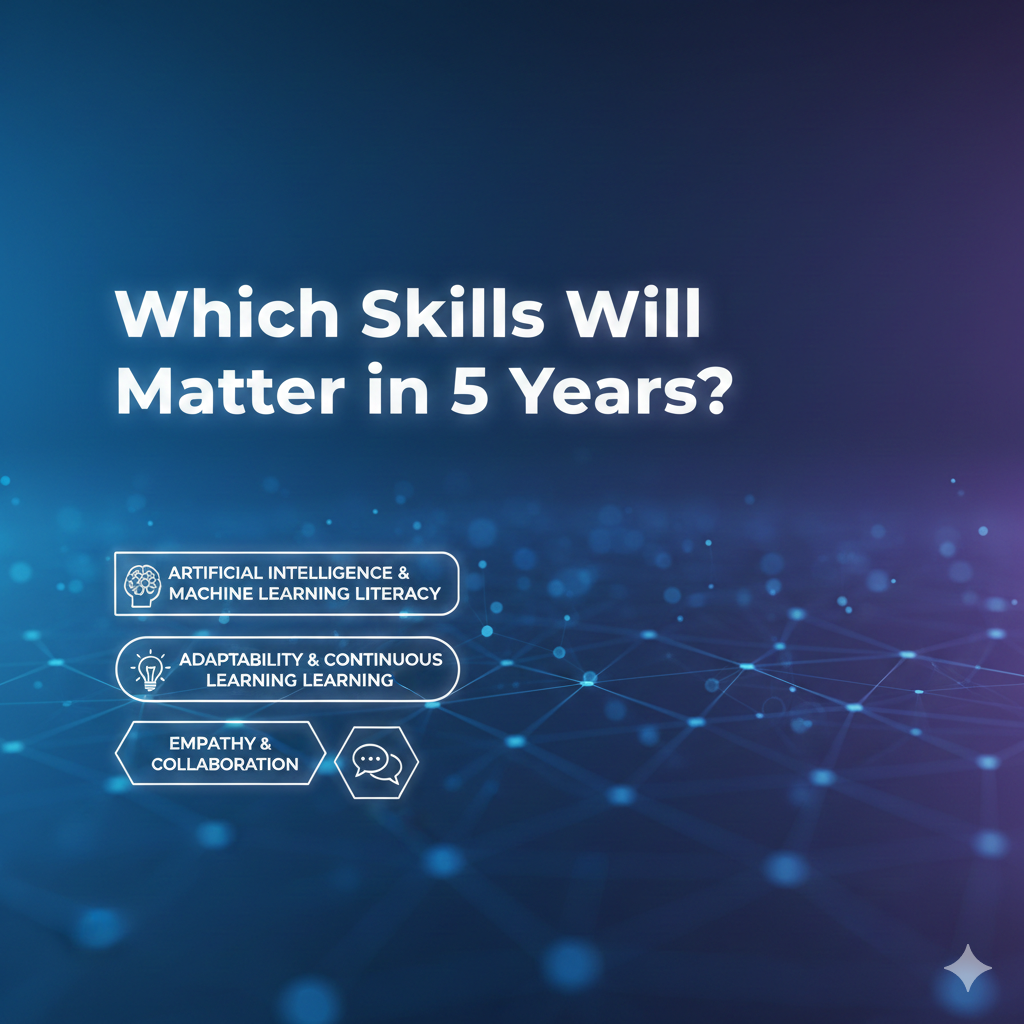
Skills that will matter in five years are those that adapt across tools, roles, and industries. Long-lasting skills aren’t predicted accurately—they’re identified by recognizing patterns in how work evolves.
Many articles attempt to forecast future skills by listing technologies or job titles. In practice, these predictions age quickly. Professionals who remain relevant don’t rely on forecasts—they build skills that transfer as work problems change. This article explains how experienced professionals identify skills that endure, what patterns signal long-term relevance, and how to avoid investing in skills that look promising but fade fast.
Why Predicting Future Skills Is So Difficult
Five-year forecasts struggle because:
Tools change faster than people can retrain
Job titles evolve unpredictably
Economic and organizational priorities shift
In real careers, relevance isn’t driven by accuracy of prediction—it’s driven by adaptability.
That’s why long-term skill planning works best when it’s pattern-based, not forecast-based.
The Patterns Behind Skills That Last
Instead of asking what skills, professionals ask why skills last.
Pattern 1: The Skill Solves Persistent Problems
Problems that don’t disappear create durable skill demand.
Examples:
Making decisions under uncertainty
Coordinating across teams
Interpreting incomplete information
Pattern 2: The Skill Works Across Contexts
Skills that matter in multiple roles age slower.
This includes:
Clear thinking
Communication
Learning efficiency
The more contexts a skill fits, the longer it lasts.
Pattern 3: The Skill Improves With Experience
Some skills get better—not outdated—with use.
Judgment, synthesis, and systems thinking fall into this category.
Skills Most Likely to Matter in 5 Years
- Judgment and Decision-Making
As automation increases, deciding what to do matters more than how to do it.
Professionals who can:
Weigh trade-offs
Spot risks early
Make reversible decisions
retain value even as tools evolve.
2. Learning Agility
The ability to learn selectively, quickly, and deeply.
From practical experience, professionals who master learning itself stay ahead—even when learning less than others.
3. Communication Across Roles
Explaining ideas to technical and non-technical audiences remains essential.
This skill becomes more valuable as teams grow more interdisciplinary.
4. Systems Thinking
Understanding how parts connect prevents narrow solutions that fail at scale.
This skill increases relevance as work becomes more interconnected.
Table: Skills That Last vs Skills That Fade
| Skill Characteristic | Long-Lasting Skills | Short-Lived Skills |
| Problem type | Persistent | Temporary |
| Tool dependence | Low | High |
| Transferability | High | Low |
| Learning curve | Compounding | Front-loaded |
| Career resilience | Strong | Fragile |
This comparison explains why some skills survive multiple cycles of change.
Common Mistakes When Choosing Future Skills
Mistake 1: Learning Skills in Isolation
Learning without context reduces retention and relevance.
Fix: Learn skills tied to real problems you face now.
Mistake 2: Chasing Visibility Instead of Value
Popular skills attract attention—but also oversupply.
Fix: Focus on skills that quietly improve outcomes.
Expert Warning
A skill that looks impressive today may be irrelevant before it pays off.
Information Gain: Skill Longevity Correlates With Abstraction
Most SERP articles rank skills by demand.
What they miss is abstraction level.
From real career outcomes:
Highly abstract skills (thinking, reasoning) last longer
Highly concrete skills (specific tools) fade faster
The higher the abstraction, the more future-proof the skill.
Practical Insight From Experience (Unique Section)
Professionals who stay relevant longest:
Learn fewer skills
Apply them more deeply
Stack skills instead of replacing them
They prioritize combination value over novelty.
This approach feels slower—but compounds.
How to Decide If a Skill Will Matter in 5 Years
Before investing time, ask:
Does this skill apply beyond one role?
Will it still matter if tools change?
Does it strengthen decision-making or influence?
If the answer is “yes” to all three, the skill is likely durable.
For alignment, see:
Most Important Work Skills in 2025
How Fast Skills Become Outdated (And Why)
FAQs
Which skills will matter in 5 years?
Transferable skills like judgment, learning agility, and communication.
Can technical skills still matter long term?
Yes—when combined with durable core skills.
Are AI skills future-proof?
Only when paired with problem understanding and decision-making.
Should I avoid learning new tools entirely?
No, but learn them selectively and strategically.
How often should future skills be reassessed?
Every 12–24 months or after major role changes.
Conclusion
Skills that will matter in five years are not best predicted—they’re best understood. Professionals who focus on transferable value, abstraction, and compounding capabilities stay relevant longer than those chasing trends. The future rewards those who build skills that adapt, not those who try to guess what’s next.
Internal link:
Skills Become Outdated: Why Some Fade Fast and How to Stay Relevant 2026
Exter link:
How to identify skill gaps in the workplace (with tips) | Indeed.com UK


