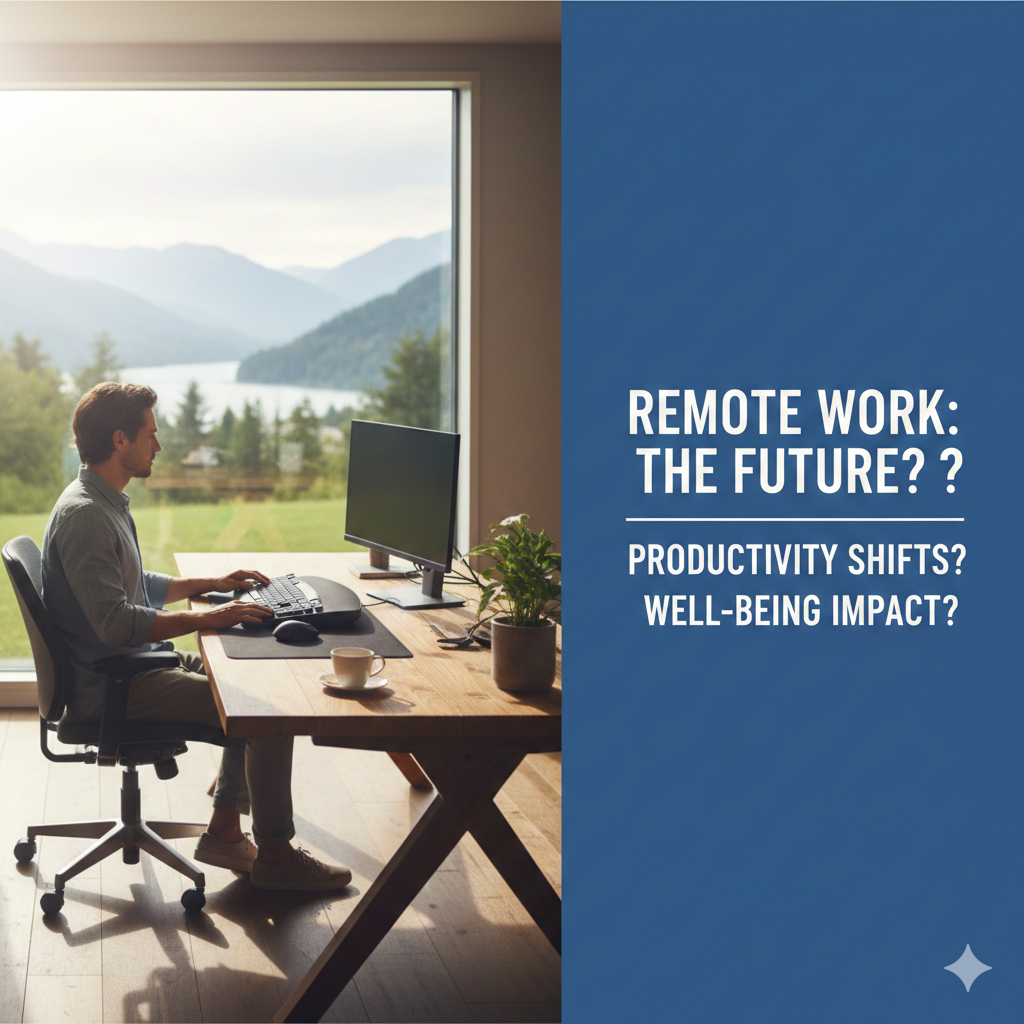
Introduction
Remote work sustainable long term is sustainable long term when organizations design clear systems for goals, communication, and recovery—not when they rely on constant availability or office-era habits. Sustainability depends on structure, not location.
After the rapid shift to remote work, many companies and professionals now ask whether it can truly last. Early enthusiasm has met real friction: burnout, coordination issues, and uneven experiences across teams. This article examines whether remote work is sustainable over the long run, what determines success or failure, and how remote work evolves from an emergency solution into a durable way of working.
What “Sustainable” Remote Work Actually Means
Sustainability doesn’t mean everyone works remotely forever.
It means remote work can function without degrading performance, well-being, or trust over time.
Long-term sustainability requires:
Predictable workloads
Clear expectations
Healthy recovery cycles
Fair career progression
When these break down, remote work feels fragile—even if short-term productivity remains high.
Why Some Remote Work Setups Fail Over Time
- Remote Work Inherits Office Assumptions
Many teams copy office practices into remote environments.
Examples include:
Back-to-back meetings
Instant-response expectations
Presence-based performance signals
These habits scale poorly without physical boundaries.
- Flexibility Without Structure
Flexibility sounds positive—but without limits it becomes pressure.
From real remote teams:
People work longer to prove commitment
Availability replaces clarity
Burnout rises quietly
Flexibility must be paired with explicit norms.
- Uneven Management Quality
Remote work magnifies leadership differences.
Strong managers:
Set clear outcomes
Trust teams
Reduce noise
Weak managers:
Micromanage
Create anxiety
Rely on constant check-ins
Remote work doesn’t cause these issues—it reveals them.
Table: Sustainable vs Unsustainable Remote Work
Area |
Sustainable Remote Work |
Unsustainable Remote Work |
| Expectations | Written & clear | Implicit & shifting |
| Communication | Async-first | Always-on |
| Performance | Outcome-based | Activity-based |
| Recovery | Protected | Ignored |
| Trust | Assumed & reinforced | Conditional |
This comparison reflects long-term patterns—not short-term experiments.
What Makes Remote Work Sustainable Long-Term
Clear Outcome Definition
Teams that define what success looks like reduce stress and misalignment.
Outcome clarity prevents:
Overwork
Redundant effort
Constant check-ins
Intentional Communication Design
Sustainable teams:
Use async by default
Reserve meetings for decisions
Document outcomes
This reduces cognitive load over time.
Built-In Recovery
Remote work removes natural recovery cues like commuting.
Long-term sustainability requires:
Explicit shutdown rituals
Real time off
Manageable workloads
Without recovery, performance erodes even if output remains high temporarily.
Common Mistakes When Evaluating Remote Work Sustainability
Mistake 1: Judging by Short-Term Productivity
Early gains can hide long-term fatigue.
Fix: Track energy, turnover, and engagement—not just output.
Mistake 2: Treating Remote Work as a Perk
Perks can be revoked. Systems endure.
Fix: Design remote work as infrastructure, not a benefit.
Expert Warning
Remote work becomes unsustainable when teams rely on personal sacrifice instead of clear systems.
Information Gain: Sustainability Is a Management Question
Most SERP articles ask whether people can handle remote work.
What they miss is organizational design.
From practical observation:
Well-designed systems outperform location choices
Poorly designed work burns people out anywhere
Remote work accelerates both outcomes
The real question isn’t “Is remote work sustainable?”
It’s “Is this organization capable of sustaining it?”
Real-World Scenario (Unique Section)
A company sees declining engagement after two years of remote work.
Instead of forcing office returns, they:
Redefine roles and ownership
Reduce meetings
Clarify performance metrics
Engagement rebounds—not because people worked from the office, but because work became manageable again.
How Professionals Can Make Remote Work Sustainable for Themselves
Individuals can protect sustainability by:
Setting response-time boundaries
Making work visible through documentation
Clarifying expectations early
Prioritizing recovery as seriously as output
For related context, see:
Why Remote Workers Feel Burned Out
Remote Work Challenges and Practical Solutions
Embedded YouTube Video (Contextual)
Suggested YouTube Embed:
“Is Remote Work Sustainable in the Long Run?”
(Choose a workplace strategy or organizational psychology channel—not opinion-driven content.)
FAQs
Is remote work sustainable long term?
Yes, when designed with clear systems and boundaries.
Why do some companies abandon remote work?
Because weak systems collapse under flexibility.
Does remote work reduce performance over time?
Only when recovery and clarity are ignored.
Can remote work support long-term careers?
Yes, with intentional visibility and growth systems.
Is hybrid work more sustainable than remote work?
It depends on management quality, not format.
Conclusion
Remote work can be sustainable long term—but only when it’s treated as a system, not a shortcut. Organizations that invest in clarity, trust, and recovery build remote models that endure. Those that rely on constant availability and invisible effort burn people out. Sustainability isn’t about location—it’s about how work is designed
Internal link:
Why Remote Workers Feel Burned Out – WorkLixa
External link:
How to identify skill gaps in the workplace (with tips) | Indeed.com UK