
Introduction
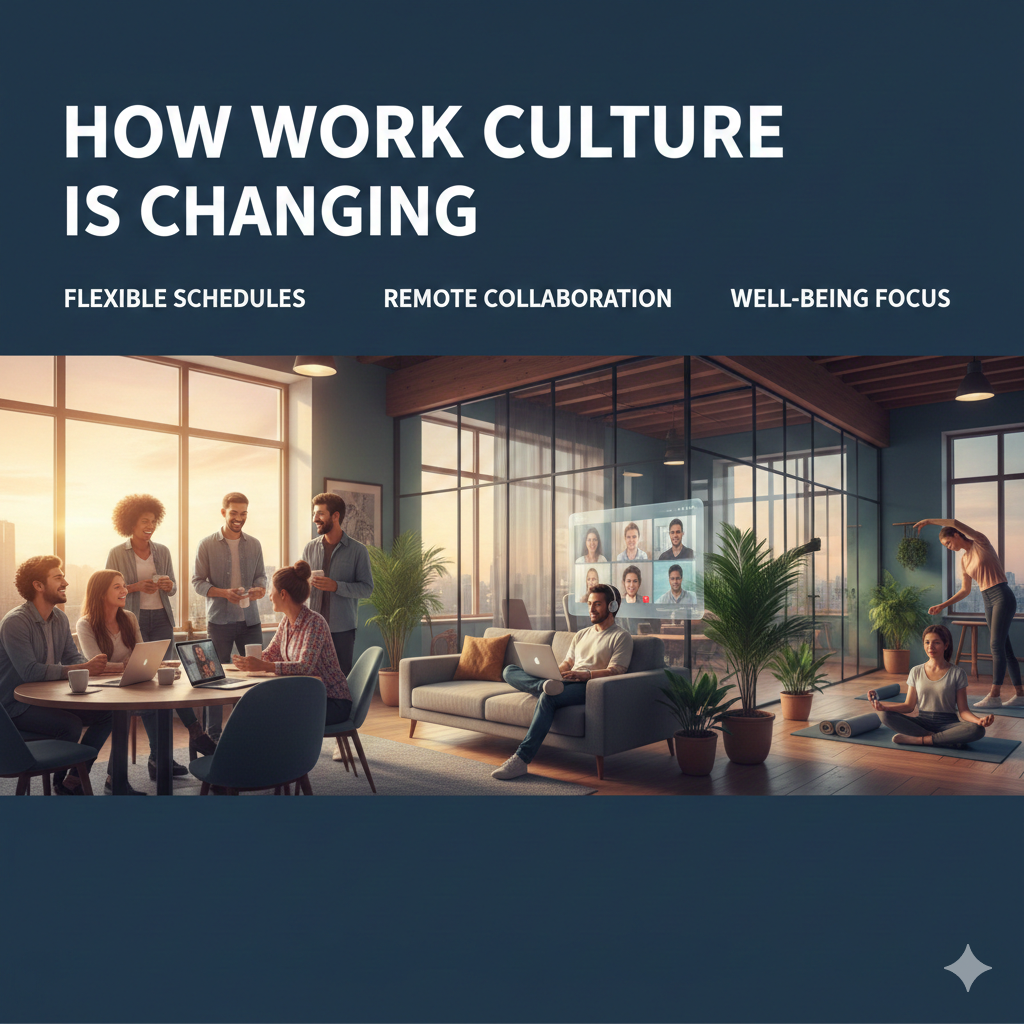
Work culture is changing because how work gets done has fundamentally shifted—not just where it happens. Expectations around flexibility, communication, trust, and performance are evolving at the same time, reshaping daily work life.
Many people sense this change but struggle to describe it clearly. Meetings feel different, feedback works differently, and what counts as “good work” isn’t always obvious anymore. This article explains how work culture is changing in practice, what’s driving these shifts, and how professionals and teams are adapting—often imperfectly—to a new reality that blends structure with autonomy.
What We Mean by “Work Culture” Today
Work culture used to be defined by:
Office presence
Fixed schedules
Clear hierarchies
Today, culture shows up more subtly:
How decisions are made
How trust is earned
How information flows
How autonomy is handled
Culture is less about perks and more about behavior under pressure.
The Key Forces Changing Work Culture
- Flexibility Has Replaced Uniformity
Flexible hours, hybrid teams, and async work have changed how collaboration works.
This has benefits—but also friction when expectations aren’t clear.
- Output Is Replacing Presence
Time spent at work matters less than outcomes produced.
This shift rewards clarity and self-management—but exposes weak systems quickly.
- Communication Is More Visible
Written communication (chat, docs, comments) now carries more weight than hallway conversations.
This favors those who communicate clearly and disadvantages those relying on informal access.
Table: Traditional Work Culture vs Modern Work Culture
| Aspect | Traditional Culture | Modern Culture |
| Work location | Office-based | Hybrid / remote |
| Performance signal | Hours & presence | Outcomes & impact |
| Communication | Meetings-first | Async-first |
| Trust model | Supervision | Accountability |
| Career signals | Visibility | Value creation |
This comparison reflects everyday work reality—not policy statements.
How Employees Experience These Changes
From real workplace experiences, cultural change often feels uneven.
Employees report:
More autonomy—but less guidance
More flexibility—but blurred boundaries
Faster communication—but more noise
Work culture isn’t simply “better” or “worse”—it’s less forgiving of unclear expectations.
Common Cultural Friction Points
Unclear Expectations
When output matters more than presence, unclear goals create anxiety.
Feedback Gaps
Less face time means feedback must be intentional—or it disappears.
Trust Misalignment
Some organizations grant flexibility but retain control-heavy habits.
Expert Warning
Flexibility without clarity often leads to burnout, not freedom.
Information Gain: Culture Is Now Experienced Individually
Most SERP articles describe culture at a company level.
What they miss is individual experience.
From practical observation:
Two people in the same company can experience completely different cultures
Culture varies by manager, team norms, and communication habits
Modern culture is localized, not uniform.
Real-World Scenario
Two employees work remotely at the same company:
One has clear goals, regular feedback, and autonomy
The other has vague priorities and constant check-ins
Same policy. Very different culture.
This gap explains why culture discussions feel contradictory.
How Professionals Can Adapt to Changing Work Culture
Practical adaptations include:
Making work visible through documentation
Clarifying expectations early
Managing energy boundaries intentionally
Communicating context, not just updates
For deeper context, see:
Remote Work Challenges and Practical Solutions
Productivity Myths About Remote Work
Embedded YouTube Video (Contextual)
Suggested YouTube Embed:
“How Work Culture Is Changing in the Modern Workplace”
(Choose an organizational psychology or workplace strategy channel—not hype-based content.)
FAQs
How is work culture changing today?
It’s shifting toward flexibility, outcomes, and async communication.
Is work culture better or worse now?
Neither universally—it depends on clarity and leadership.
Does remote work define culture now?
No. Management behavior defines it more.
Why does culture feel inconsistent?
Because it varies by team and manager.
Can culture be fixed quickly?
Rarely. It evolves through behavior, not policies.
Conclusion
Work culture is changing in ways that aren’t always visible on the surface. As flexibility, autonomy, and output-based work become standard, culture depends less on location and more on clarity, trust, and communication. Professionals and organizations that understand this shift adapt faster—and with less friction—than those trying to recreate old models in new environments.
Internal link:
Remote Work Challenges and Practical Solutions: How to Stay Productive
External link:
How to identify skill gaps in the workplace (with tips) | Indeed.com UK


