Introduction
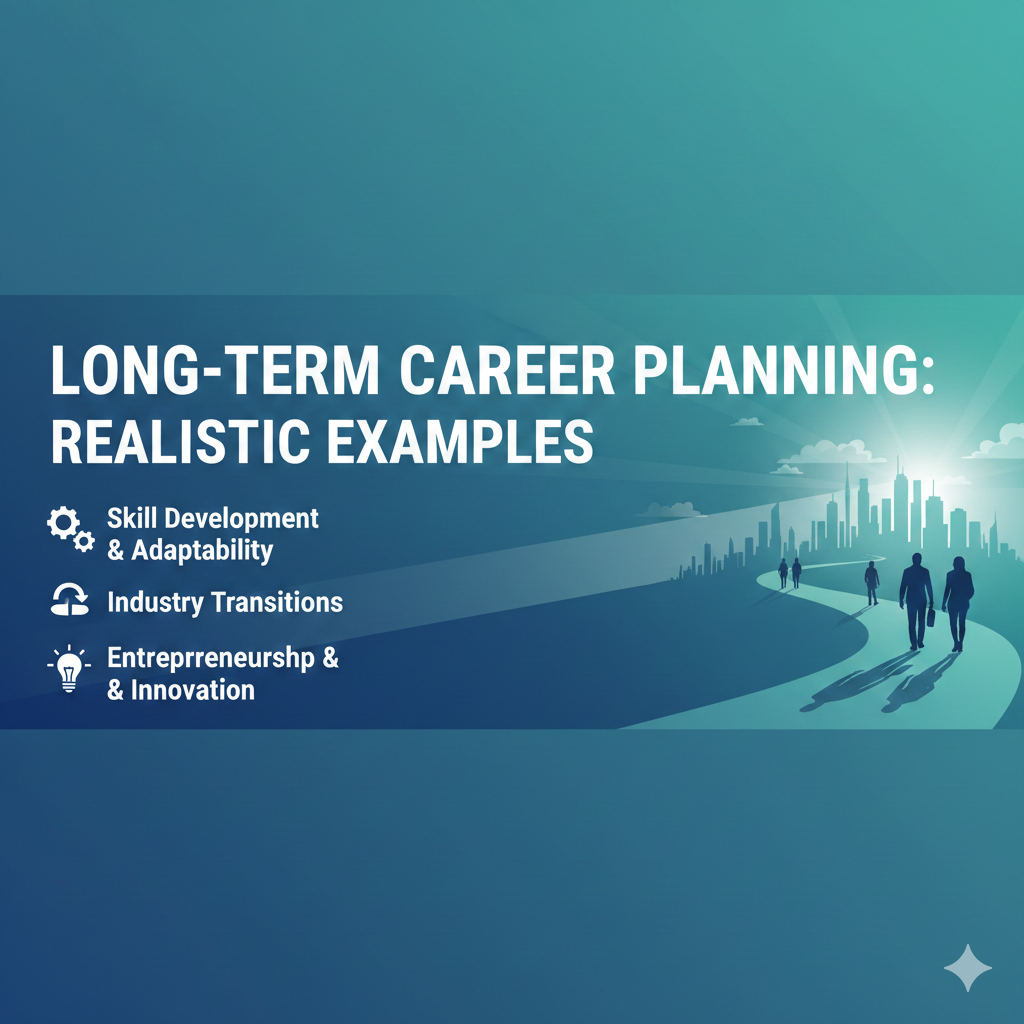
Long-term career planning works best when it stays flexible, realistic, and grounded in uncertainty. Instead of rigid five-year plans, professionals who adapt their plans regularly make better decisions over time.
Many people abandon career planning entirely because traditional advice feels disconnected from reality. Industries change, roles evolve, and personal priorities shift. This article explains how professionals plan long term without pretending the future is predictable, using realistic examples that balance direction with adaptability. These approaches reduce anxiety, prevent over-commitment, and help careers grow steadily—even when circumstances change.
Why Traditional Long-Term Career Planning Fails
Most long-term plans break down for three reasons:
- They Assume Stability
Older models assume industries, tools, and job structures stay consistent. That assumption no longer holds.
- They Over-Commit Too Early
Locking into one role, industry, or skill too soon reduces flexibility later.
- They Ignore Skill Decay
Skills don’t age evenly. Some last decades; others fade quietly within a few years.
As a result, many professionals feel their “plan” becomes a source of pressure instead of clarity.
What Realistic Long-Term Career Planning Looks Like Today
Modern career planning focuses less on destinations and more on directional control.
Instead of asking:
“Where do I want to be in 10 years?”
Professionals ask:
“What options do I want available in 3–5 years?”
This shift changes everything.
Table: Rigid Planning vs Realistic Career Planning
| Aspect | Rigid Planning | Realistic Planning |
| Time horizon | Fixed (5–10 years) | Rolling (18–36 months) |
| Skill focus | One narrow track | Adjacent & transferable |
| Risk handling | Ignored or minimized | Actively managed |
| Flexibility | Low | High |
| Emotional impact | Anxiety-driven | Confidence-driven |
Three Realistic Long-Term Career Planning Examples
Example 1: The “Expandable Role” Planner
A professional stays in one company but gradually expands responsibility:
Starts with execution
Moves into decision support
Later influences strategy
The title barely changes but career value compounds.
Example 2: The “Skill Portfolio” Planner
Instead of chasing one future role, this professional builds:
One core skill
One adjacent skill
One stabilizing skill
This creates optionality across industries.
Example 3: The “Scenario Planner”
Rather than one plan, they maintain:
Best-case scenario
Base-case scenario
Fallback scenario
This reduces fear and improves decision quality.
Common Long-Term Career Planning Mistakes
Mistake 1: Planning Outcomes Instead of Capabilities
People plan job titles instead of skills and leverage.
Fix: Plan what you’ll be able to do, not what you’ll be called.
Mistake 2: Ignoring Personal Constraints
Energy, family, health, and risk tolerance matter.
Fix: Define what you’re unwilling to sacrifice long term.
Money-Saving Recommendation
Before investing in expensive degrees or certifications, test relevance through small projects, short courses, or temporary role expansions.
Information Gain: The Best Plans Define Constraints, Not Destinations
Most SERP articles focus on goal-setting.
What they miss is constraint-based planning.
From real planning experience:
Constraints protect against burnout
Constraints prevent regret
Constraints guide better trade-offs
Knowing what you won’t do often matters more than knowing exactly where you’re going.
Practical Insight From Experience
Professionals who revisit their career plans every 18–24 months:
Feel less trapped
Make fewer panic moves
Adjust earlier instead of later
Long-term planning works best as a living document, not a fixed promise.
How Long-Term Planning Connects to Career Growth
Long-term planning doesn’t replace daily growth—it directs it.
For strategy alignment, see:
Career Growth Strategies for Professionals Today
How Careers Are Changing in 2025 and Beyond
Embedded YouTube Video
Suggested embed:
“How to Plan Your Career Without a 5-Year Plan”
(Choose a thoughtful career strategy or decision-making channel, not motivational hype.)
FAQs
Is five-year career planning outdated?
Rigid five-year plans often are, flexible planning is not.
How often should career plans change?
Every 18–24 months or after major life/work shifts.
Do goals still matter in planning?
Yes, but as direction markers—not fixed endpoints.
Can planning reduce career anxiety?
Yes, when it increases options instead of pressure.
What if my industry changes suddenly?
Scenario-based planning handles this best.
Conclusion
Realistic long-term career planning accepts uncertainty instead of fighting it. Professionals who plan for flexibility, transferable value, and evolving priorities make steadier progress and fewer regret-driven decisions. The strongest plans don’t predict the future—they prepare for multiple versions of it.
Internal Link:
How to Future-Proof Your Career Without Chasing Trends
External Link:
https://hbr.org/