Introduction
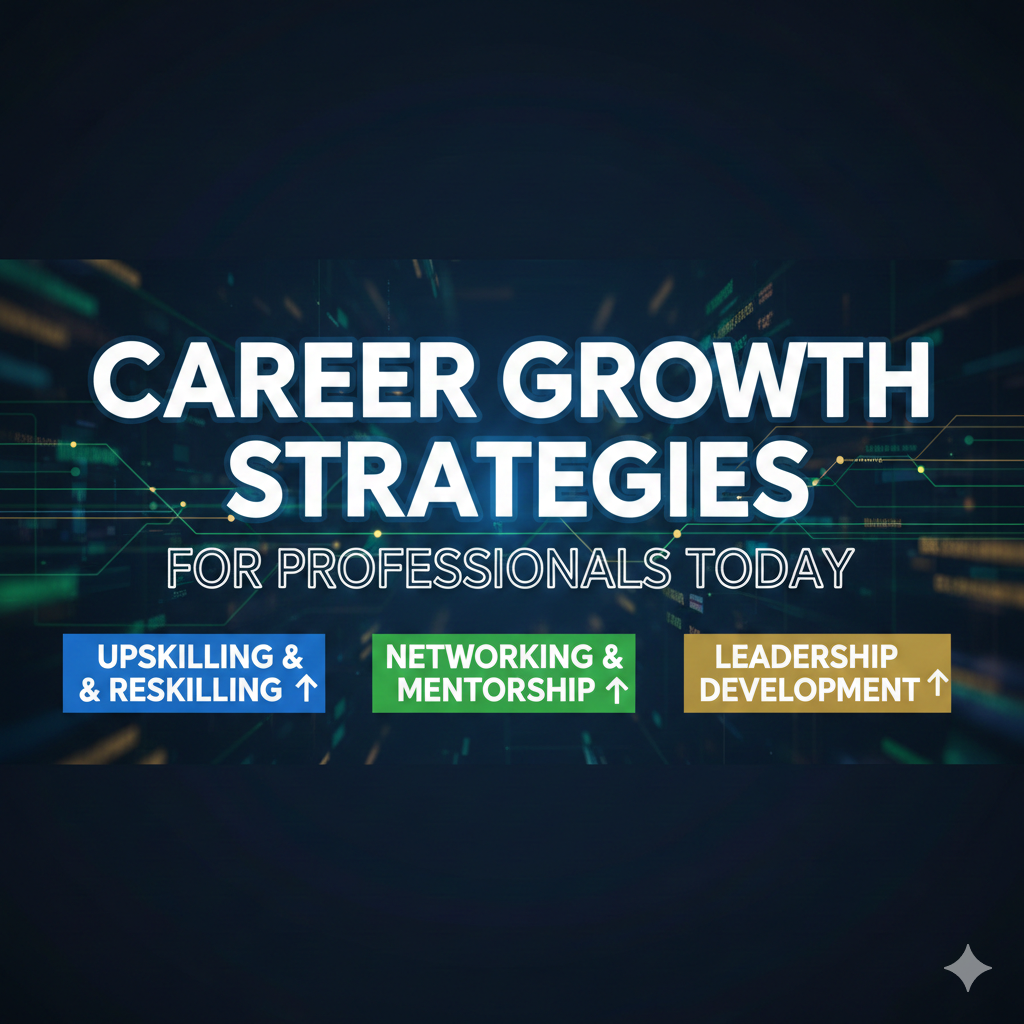
Career Growth Strategies for Professionals strategies for professionals today focus less on promotions and more on influence, adaptability, and long-term value. In modern workplaces, growth comes from how problems are solved, not how long someone stays in a role.
Many professionals feel busy yet stagnant because traditional advice no longer fits how work actually operates. Titles change slowly, roles blur, and learning curves flatten without warning. This article explains practical growth strategies that work in today’s environment—based on real workplace behavior, not outdated ladders—so professionals can grow deliberately instead of reacting late.
Why Traditional Career Growth Advice No Longer Works Career Growth Strategies for Professionals
Older career advice assumed:
Clear hierarchies
Predictable promotions
Stable role definitions
Today, most organizations prioritize flexibility over structure. Growth is rarely assigned formally. It emerges when professionals expand their value beyond job descriptions.
Waiting for recognition alone is no longer a reliable strategy.
Modern Career Growth Strategies That Actually Work
1. Grow by Expanding Problem Ownership
Professionals who advance fastest don’t just complete tasks—they take ownership of unclear or high-impact problems.
This includes:
Defining problems others avoid
Coordinating across teams
Translating complexity into decisions
From real workplace usage, managers reward problem clarity more than speed.
2. Build Skill Adjacency (Not Random Skills)
Learning works best when new skills sit next to existing strengths.
For example:
A marketer learning analytics basics
A developer learning product thinking
A manager learning system design
This creates faster trust and easier application.
3. Increase Strategic Visibility
Visibility is not self-promotion. It’s making your thinking visible where decisions happen.
Practical ways:
Sharing insights in planning meetings
Documenting lessons learne
Helping leaders think, not just execute
Table: Career Growth Strategies vs Outcomes
| Strategy | Short-Term Effect | Long-Term Impact |
| Promotion chasing | Motivation spikes | Fragile growth |
| Skill adjacency | Faster relevance | Durable value |
| Problem ownership | Increased trust | Leadership leverage |
| Visibility of thinking | Influence grows | Strategic roles |
| Random certifications | Resume padding | Low ROI |
Common Career Growth Mistakes
Mistake 1: Confusing Busyness with Progress
Doing more work doesn’t always mean growing.
Fix: Focus on work that changes outcomes, not workload.
Mistake 2: Waiting for Permission to Grow
Many professionals wait for managers to “allow” growth.
Fix: Start reshaping your role quietly through value creation.
Expert Warning
Growth that depends entirely on approval is fragile. Growth driven by value compounds.
Information Gain: Growth Comes From Leverage, Not Effort
Most SERP articles emphasize skill acquisition.
What they miss is leverage.
From practical situations, growth accelerates when:
Your decisions affect multiple people
Your work scales beyond your time
Others depend on your judgment
Effort enables growth—but leverage multiplies it.
Beginner Mistake Most People Make
Trying to grow too fast.
Many professionals overload themselves with courses, certifications, and side projects. This creates motion—but not direction.
Experienced professionals grow slower, but more deliberately, choosing moves that stack over time.
Practical Growth Framework
Ask yourself quarterly:
What problems do people trust me with now?
Has my decision influence increased?
Am I learning skills that transfer elsewhere?
If at least two answers improve, growth is happening.
For long-term alignment, read:
How Careers Are Changing in 2025 and Beyond
Embedded YouTube Video
Suggested embed:
“How to Grow Your Career Without Job Hopping”
(Choose a practical career strategy channel, not motivational content)
FAQs
Do career growth strategies still matter without promotions?
Yes. Influence and learning now matter more than titles.
Is job hopping required to grow?
No. Many professionals grow faster by reshaping roles internally.
How long should I stay in one role?
As long as learning and influence are increasing.
Are certifications useful for growth?
Only when tied to real application.
Can specialists still grow today?
Yes, when they expand problem scope—not just depth.
Conclusion
Career growth strategies for professionals today require clarity, patience, and positioning—not speed. Those who focus on expanding influence, adjacent skills, and decision leverage build careers that remain resilient even as roles change. Growth is no longer assigned—it’s constructed
Internal Link
Career Growth Strategies for Professionals Today
External Link
https://hbr.org/